Coastal Dynamics
Overview
Physical dynamics are the fundamental drivers of sediment transport, pollutant dispersion, and ecosystem health. Coastal and estuarine dynamics involve a complex interplay of tides, freshwater discharge, and atmospheric forcing. Due to significant freshwater input, these waters are typically characterized by strong salinity gradients that drive estuarine circulation—where denser, high-salinity bottom water moves landward while fresher surface water flows seaward.
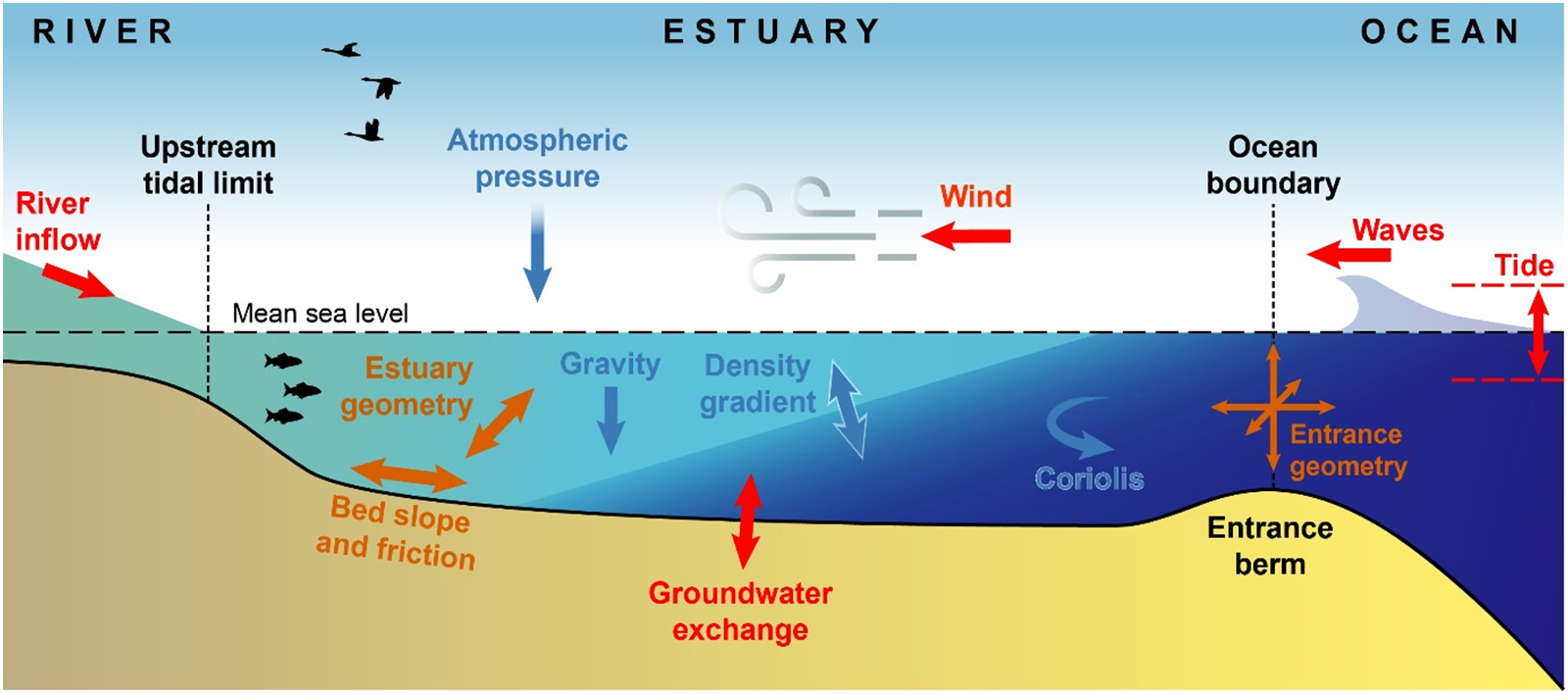 (Figure source: Danial Khojasteh et al. 2021)
In our lab, we investigate how coastal and estuarine processes respond to varying physical forcings, climate change, sea-level rise (SLR), and extreme weather events.
Study 01: Impact of Sea-Level Rise on Tide, Wave, and Sediment Dynamics
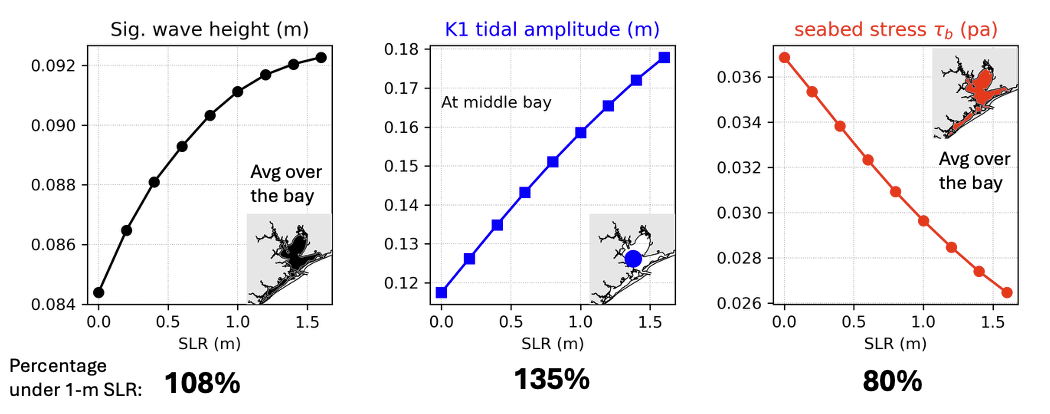
We conducted a series of sensitivity tests demonstrating that sea-level rise can enhance significant wave height and tidal amplitude while simultaneously reducing seabed shear stress. Collectively, these changes lead to weaker sediment resuspension and lower suspended sediment concentrations within coastal bays.
Study 02: Hurricane Harvey’s Impact on Hydrodynamic and Sedimentary Processes
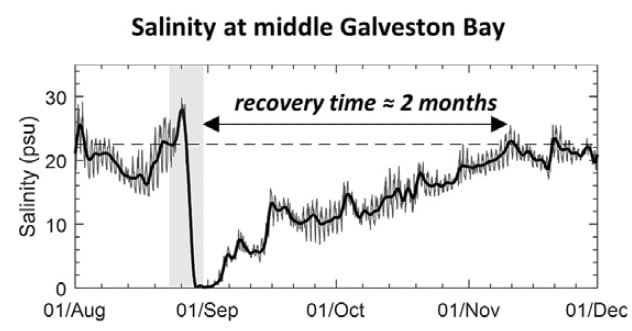
Hurricane Harvey (2017) was a Category 4 hurricane renowned for producing unprecedented rainfall—a 1,000-year event—along the Gulf Coast. By integrating continuous monitoring data with high-resolution ocean model simulations, we examined how this enormous freshwater pulse disrupted estuarine dynamics and determined the recovery timescales for physical oceanic conditions.